


|

|
|
|

|
Search
05/04/2026 David Secord, DPM
Podiatric Research
I noted a palpable disinterest in research when I
did my time at Temple. Even though I spent a great
deal of time at the Gait Lab under the guidance of
Howard Hillstrom, PhD (who is now at the Hospital
For Special Surgery in NYC) and was involved in
seven different projects which were published in
peer-reviewed journals, there were very few others
amongst my peers, outside of James Furmato, DPM,
MS, PhD.
Although I wasn’t in attendance at a meeting in
Toronto to see the reaction, a study we did upon
instrumentation calibration concluded with the
idea that if you aren’t constantly calibrating an
instrument before you are using it, the data you
are collecting is worthless and—therefore—the
conclusions you are drawing, based upon that
worthless data are, themselves, worthless. From
what I was told, all jaws dropped in the room, as
this applied to all in attendance. Heady stuff,
indeed. I was interested in this stuff as I was an
Electrical Engineer before my time at Temple. This
also allowed me to breadboard and construct a
number of custom circuits we used in projects
which would have been thousands of dollars if
contracted out for design, construction and
delivery. Funds we did not possess.
Once I started my residency, I was part of the
research team for the FDA Phase III trials of
Synercid (quinupristin and dalfopristin) for the
treatment of VRE under director Judith Wolfe, MD.
I also did a retrospective study on all of the
patients admitted through the ED at The Graduate
Hospital who went on to amputation and a terminal
amputation as a below-knee amputation or above-
knee amputation. After eliminating those poor
souls who immediately went to below-knee
amputation as they didn’t help establish an
amputation trend, the number of patients was 1483.
We conclusively showed that if you start at the
hallux or 1st metatarsal, the next ulceration was
very likely at the sub-2nd metatarsal 8-10 months
later. Every 8-10 months, you would move
laterally, from metatarsal head to metatarsal head
and then a transmetatarsal amputation and maybe a
Chopart’s and then a below-knee amputation or
above-knee amputation.
If you started at the 5th metatarsal head, the
same time period and amputation pattern emerged,
moving medially. We also showed that a
transmetatarsal amputation with a gastrocnemius
recession or tendo-Achilles lengthening would
greatly reduce re-ulceration at the distal aspect
of the transmetatarsal amputation. None of this
was published because I never got into the nuts
and bolts of research while at Temple and had no
idea what an IRB was. Without that IRB paperwork,
no one would look at it. I remember doing the
final number crunching on the Excel spreadsheet in
the library of The Graduate Hospital on Christmas
Eve.
It is unfortunate that our institution hadn’t done
any large project before and no one knew of the
importance of IRB involvement. Now adays, you have
sources such as this one:
https://www.nova.edu/irb/manual/forms/index.html
What it would take to have residents involved in
the research paradigm to work beyond the obvious
movers and shakers in podiatry is beyond me. I had
a thirst for it but no one else did besides James
Furmato or the PhD candidates and I couldn’t
understand it. Perhaps it is akin to NASCAR and
Monster Truck rallies: you either understand the
appeal or you don’t.
David Secord, DPM, McAllen, TX
Other messages in this thread:
05/04/2026
RESPONSES/COMMENTS (PODIATRIC RESEARCH)
RE: Podiatric Research (Kathleen Neuhoff, DPM, DVM)
From: David Secord, DPM
I noted a palpable disinterest in research when I did my time at Temple. Even though I spent a great deal of time at the Gait Lab under the guidance of Howard Hillstrom, PhD (who is now at the Hospital For Special Surgery in NYC) and was involved in seven different projects which were published in peer-reviewed journals, there were very few others among my peers, outside of James Furmato, DPM, MS, PhD.
Although I wasn’t in attendance at a meeting in Toronto to see the reaction, a study we did upon instrumentation calibration concluded with the idea that if you aren’t constantly calibrating an instrument before you are using it, the data you are collecting is worthless and—therefore—the conclusions you are drawing, based upon that worthless data are, themselves, worthless. From what I was told, all jaws dropped...
Editor's note: Dr. Secord's extended-length letter appears here.
05/01/2026
RESPONSES/COMMENTS (PODIATRIC RESEARCH)
From: Kathleen Neuhoff, DPM, DVM
When I went to veterinary school, one of the things we were frequently told was that the difference between a medical profession and a trade was research. Over my career, my veterinary practice participated in eight phase 2 clinical trials. Although they were a pain in the rear, and the compensation was never adequate, it was understood that it was an obligation to participate in them. As a podiatrist, I have never been asked to participate in any kind of clinical trial and nearly all of the podiatrists I know have also never participated in one.
Most research in podiatry seems to be done by a few remarkable and prolific individuals. I do not think the importance or value of research has ever been instilled into podiatry students, and the lack of such research is one of the obstacles that slows our road to parity.
Kathleen Neuhoff, DPM, DVM, South Bend, IN
04/30/2026
RESPONSES/COMMENTS (PODIATRIC RESEARCH)
From: Peter Sorensen, DPM
I'd like to add my perspective as a resident involved in current research. I coordinate research for the 12 residents at our program. We have about ten current projects. I agree that the administrative burden is a lot when in residency, but what we have found to be our biggest challenge as residents is a lack of longitudinal data sets. I have finished up projects that residents started five years ago. Once they begin practice, the residency research project gets put on the shelf to hopefully be taken up by a younger resident class. I have started a prospective study here with an attending as Primary Investigator. IRB approval took 8 months. Enrollment will take another year, then an additional six months for post-op data collection. I'll be fresh into practice when it's time to wrap this up - who knows if I'll be able to finish it up?
Many podiatry residents are not just willing to do research, we are eager to do so! We CAN find the time. We just don't always have data for the projects we are actually interested in. So what's the solution? Enter the National Foot and Ankle Registry (NFAR). Fairly recently, ACFAS launched it. It is a data registry for foot and ankle surgeons with modules currently covering ankle arthritis, ankle fracture, hammertoe, and hallux valgus; standardized outcomes, PROs, complications, length of stay, etc. The goal is to have structured data that actually allows meaningful comparison across sites. Some regions are subsidizing first-year fees to help new sites to get started. I think this is a HUGE step towards real, impactful research being published in our field. The infrastructure has been built; now we need mass participation. Please go check it out and consider participating! Current and future residents will thank you for it.
Peter Sorensen, DPM, Indianapolis, IN
04/29/2026
RESPONSES/COMMENTS (PODIATRIC RESEARCH)
RE: Podiatric Research
From: Rod Tomczak, DPM, MD, EdD
In 1992, before some of our current DPMs were born, I either got a phone call or ran inro Allen Jacobs, DPM. He said that he was looking over the table of contents of the most recent Journal of Foot Surgery the progenitor of JFAS. He said when he saw the word “Meta-Analysis" in the title of one of the articles, he was certain that I had written the article before confirming it by reading the name of the author. The article has been used in malpractice cases. When questioned by plaintiffs’ attorneys, I responded, “It says what it says.” When the defense attorneys ask questions, I suggest that in this case, the meta-analysis suggests that within certain parameters, the choice of first metatarsal osteotomies is the “surgeon’s choice.”
One can argue that, hopefully, this article saved money for fellow podiatrists. Consider the place a meta-analysis holds today in the hierarchy of evidence-based medicine. It is at the top or very near the top of the pyramid. To say research by podiatry schools, their faculty, and students is almost impossible because of the cost and lack of funding might not be totally correct.
Writing that meta-analysis article costs nothing, $0.00, Zip. The one student and I spent a lot of time reading the numerous articles, constructing inclusion and exclusion criteria, and performing the calculations to come up with no practical significance between a surgeon’s choice of metatarsal osteotomies. Other authors will tell you it takes time, a lot of time to get results, and it does. But industry doesn’t have to support the work with questionable funds.
Rod Tomczak, DPM, , MD, EdD, Columbus, OH
09/12/2023
PODIATRIC RESEARCH
MGH Adds 2 NYCPM Students to its Research Team
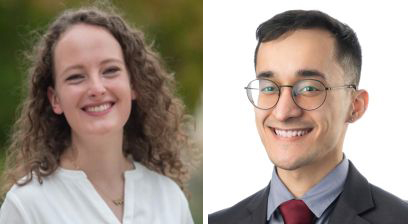
Massachusetts General Hospital (MGH) has added two more podiatric medical students to its podiatry research team. Nicole Sciotti and Mohammed Shigri, both from the New York College of Podiatric Medicine (NYCPM), have been selected by the MGH Podiatry Research team as student researchers.
 |
Nicole Sciotti and Mohammed Shigri |
Nicole and Mohammed represent the 9th and 10th podiatric medical students to join the MGH podiatric medical student team, now in its 5th year of existence. The MGH Podiatric Research team is part of MGH's Foot and Ankle Research and Innovation Lab (FARIL).
11/01/2018
PODIATRIC RESEARCH
MI and CA Podiatrists Present Research at NIH DFU Workshop
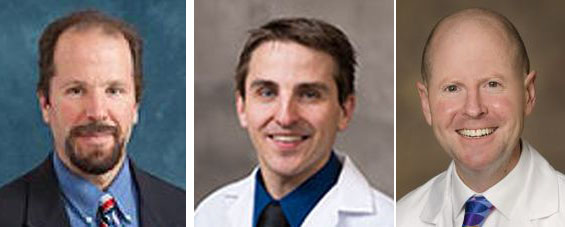
The United States National Institutes of Health (NIH) recently held its first ever workshop on diabetic foot ulcers and biomarkers in Bethesda Maryland. Podiatric surgeons were well represented at the gathering. Drs. James Wrobel and Brian Schmidt represented the University of Michigan, and David G. Armstrong the University of Southern California. Wrobel was a key moderator for sessions dealing with lower extremity ischemia.
 |
(L-R) Drs. James Wrobel, Brian Schmidt, and David Armstrong |
Dr. Schmidt presented new data on phenotyping wounds prone to inflammation. Dr. Armstrong presented novel new research on injectable sensors that could be read using a next-generation patch. The meeting, which consisted of scientists from across the nation, is designed to develop a consortium of research centers to scale up important early-stage research in wound healing focusing on biomarkers and diagnostics.
08/27/2015
PODIATRIC RESEARCH
Podiatric Research Honored by American Society of Plastic Surgery
 |
(L-R) Drs. David Armstrong and Adam Isaac |
The Southern Arizona Limb Salvage Alliance (SALSA) was awarded a coveted "Best Paper Award" for their work entitled “Mechanically Powered Negative Pressure Wound Therapy as a Bolster for Skin Grafting”. David G. Armstrong, DPM, MD, PhD, Professor of Surgery and Director of SALSA, was senior author on the manuscript. Adam Isaac, DPM and Jessica Rose, DO co-authored the paper. The awards will be formally given out in a ceremony at the American Society of Plastic Surgery Annual Meeting to be held in Chicago in October.
04/10/2015
PODIATRIC RESEARCH
AZ Podiatrist's Study Uses Watch and Insoles to Improved Balance
Researchers and entrepreneurs are developing apps to make Arizonans healthier, and they also are testing existing mobile health devices to see if they actually work. “We can now empower people to take their health into their own hands,” said Dr. David G. Armstrong, UA professor of surgery and director of Southern Arizona Limb Salvage Alliance. “That’s the future of care. What’s pretty cool is that future is now.”
 |
Dr. David Armstrong |
Andreas Proroczok, a patient in Armstrong’s research study, used SurroSense Rx, which is a watch that is connected to shoe insoles to help with balance. The insoles monitor four pressure points to help track balance. When a patient stands on one pressure point too long, the watch notifies the patient. Due to Proroczok’s severe neuropathy, he lost half his foot and cannot feel certain pressure points. The watch notifies him when he has abnormal pressure on his feet, Proroczok said. “Because I have no sensation in my feet, it actually helped me balance out better in my feet,” Proroczok said.
Source: Rebecca Marie Sasnett, The Daily Wildcat [4/6/15]
09/22/2014
PODIATRIC RESEARCH
Research Highlights Effectiveness of Podiatric and Vascular Sx to Reduce Amputations
Researchers at the University of Texas Southwestern Medical Center in Dallas published results of a study in the Journal of Vascular Surgery that demonstrated a 2.7-fold greater risk of amputations when patients with critical limb ischemia were not treated by a combined team of vascular surgeons and podiatrists.
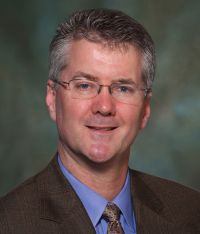 |
Dr. Lawrence Lavery |
Lawrence Lavery, DPM, Professor in the Department of Plastic Surgery, said, "While our results are not surprising to people that work in this type of collaborative environment, quantifying our effectiveness is helpful to solidify administrative support and validate the process."
Source: Chung J, Modrall G, Ahn C and Lavery LA: Multidisciplinary care provides amputation-free survival in patients with chronic limb ischemia. J Vasc Surg 2014 Jul 26. pii: S0741-5214(14)01127-6.
09/19/2014
PODIATRIC RESEARCH
TX Podiatrist's Research Selected as One of the Top Proposals at EASD
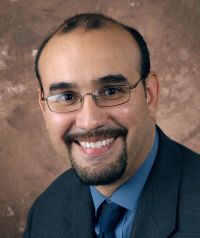 |
Dr. Javier LaFontaine |
Research by Javier LaFontaine, DPM was selected as one of the top proposals at the Diabetic Foot Study Group at the European Association for the Study of Diabetes (EASD) annual meeting. Dr. LaFontaine’s study, "Assessment of SPECT/CT and MRI for Diagnosis of Bone Biopsy Proven Diabetic Foot Osteomyelitis", compared techniques to diagnose bone infections. The 50th Annual Meeting of the EASD is being held in Vienna, Austria, September 15-19th, 2014. LaFontaine is an Associate Professor in the Department of Plastic Surgery at the University of Texas Southwestern Medical Center in Dallas, TX.
04/11/2012 Peter Vannucchi, DPM
More Awards For Podiatric Research
Podiatry Management is to be commended for its recognition of America's most influential podiatrists. Their hard work and devotion have illuminated our profession and serve as an inspiration for all of us.
Awards have a purpose. They are the “carrots” to
encourage activity of some sort that the donor
feels is important. ometimes they can be
just “congratulations” for a job well done. So
why aren't there more awards available to
podiatric foot and ankle surgeons for a job well
done?
Let's say a monetary grant ($2,000) for a topic
or clinical research that contributes to the
practice of foot and ankle disorders with an
additional donated sum to the recipient's
designated institution, preferably a podiatry
school.
There are plenty of sponsors out there in the
podiatric marketplace whether it be equipment
manufacturers, orthopedic suppliers,
pharmaceutical companies, etc. They just need to
be approached as providers of awards of
recognition. These awards would give some
impetus and raison d'être. Awards such as this
would be good for the recipient and good for the
advancement of podiatry.
Peter Vannucchi, DPM, Dallas, TX,
vannucchi@att.net
03/30/2012
PODIATRIC RESEARCH
Article by MA Podiatrist Shows Effectiveness of Laser for Onychomycosis
Nomir Medical Technologies, Inc., has announced that new data from its landmark pivotal onychomycosis trial first published in the peer-reviewed Journal of the American Podiatric Medical Association (JAPMA) has once again been published in this prestigious journal. The new paper, which reports on a 270-day onychomycosis clinical trial, offers further scientific support for using the Noveon lasers as an effective therapeutic treatment.
 |
Dr. Adam Landsman |
This paper (JAPMA 102(2): 169-171, 2012) authored by Adam Landsman, DPM, PhD and Alan Robbins, MD is the third in a series of peer-reviewed articles published in JAPMA about Nomir’s Noveon Laser. The first Noveon-related JAPMA paper surveyed the emerging field of laser treatments for podiatric infectious disease. The second paper presented the initial 180-day results of Nomir’s pivotal human clinical trial for the Noveon treating onychomycosis.
10/08/2011
PODIATRIC RESEARCH
AZ & CA Podiatrists Win SAWC Poster Award
The Symposium on Advanced Wound Care (SAWC) has awarded David G. Armstrong, DPM, MD, PhD, William A. Marston, MD, Alexander M. Reyzelman, DPM and Robert S. Kirsner, MD, PhD the highest scoring abstract in the clinical research category for their poster entitled, "Comparative Effectiveness of Mechanically and Electrically Powered Negative Pressure Wound Therapy (NPWT) Devices: A Multicenter Randomized Controlled Trial." Addressing a major healthcare concern, the poster highlights the treatment options of chronic wounds, and includes analysis in support of the safety of NPWT, the delivery of negative pressure for wound healing. This winning abstract will be presented at the upcoming SAWC Fall 2011, October 13-15, in Las Vegas.
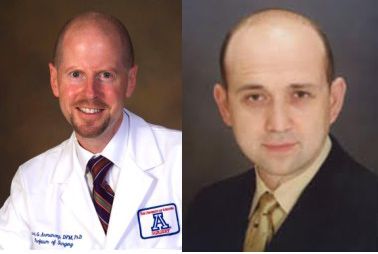 |
Drs. David Armstrong and Alexander Reyzelman |
The winning poster highlights a 17-center randomized-controlled trial (RCT), which enrolled 132 subjects with chronic, non-infected, non-ischemic, non-plantar lower extremity diabetic and venous wounds. The study was designed to compare the ultra-portable mechanically powered SNaP(R) Wound Care System from Spiracur, Inc. to the electrically powered Vacuum-Assisted Closure (V.A.C.(R)) Therapy System from Kinetic Concepts, Inc. Data includes promising analysis supporting the efficacy and safety of the SNaP System in the treatment of chronic lower extremity wounds.
08/09/2011
PODIATRIC RESEARCH NEWS
UofA's SALSA-led Team Wins National Research Award in Wound Healing
Dr. David G. Armstrong, Professor of Surgery and Director of the University of Arizona's Southern Arizona Limb Salvage Alliance (SALSA) led a nationwide team of investigators who were awarded the top prize for clinical research to be held at the Fall meeting of the Symposium for Advanced Wound Care (SAWC). The first-ever study of its kind in wound healing compared two different types of so-called "negative pressure wound therapies", which apply highly specialized vacuums to wounds to speed blood vessel growth and healing.
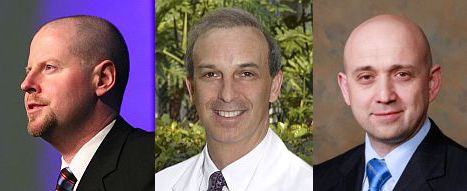 |
Dr. David Armstrong, Robert Kirsner, and Alex Reyzelman |
"These types of comparative efficacy studies are increasingly critical to the health of our patients and to the viability of our healthcare system," noted Dr. Armstrong. "They will help drive innovation and help identify where we can improve." The results of the studies will be presented at the SAWC in October in Las Vegas. They are authored by Armstrong along with Drs. Robert Kirsner (University of Miami), Alex Reyzelman (Samuel Merritt University) and William Marston (University of North Carolina).
08/09/2011
RESPONSES / COMMENTS (PODIATRIC RESEARCH)
RE: Effectiveness of a Multi-faceted Podiatry Intervention to Prevent Falls in Older People
From: Doug Richie, DPM
It was a privilege to present this newly published research in the Biomechanics Section of the recent APMA National Meeting in Boston. One of the co-authors of this research, Hylton Menz was extremely helpful in providing background data and related studies that his team has published over the past 10 years. This group of Australian podiatrists have published pioneering research in muti-disciplinary journals which have provided significant insight into the cause and prevention of falls in the elderly.
This recent prospective, randomized trial demonstrated that a mutifaceted program, implemented by podiatrists in Australia reduced the rate of falls in elderly patients with foot pain by 36% during a 12 month period. The main components of the program were patient education, regular podiatric care, a pair of custom foot orthoses, and a pair of proper shoes. This program can be easily adapted and implemented in the United States, and the APMA is going to focus on this initiative in the next few months.
Doug Richie, DPM, Seal Beach, CA, DRichieJr@aol.com
08/06/2011
PODIATRIC RESEARCH
Effectiveness of a Multi-faceted Podiatry Intervention to Prevent Falls in Older People with Disabling Foot Pain: Randomized Controlled Trial
A multi-faceted podiatry intervention reduced the rate of falls in community-dwelling older people with disabling foot pain. The components of the intervention are inexpensive and relatively simple to implement, suggesting that the program could be incorporated into routine podiatry practice or multidisciplinary falls prevention clinics.
Source: Spink MJ, et al. British Medical Journal, [08/04/11]
11/27/2010
PODIATRIC RESEARCH
HyProCure(R) Key In The Treatment And Prevention Of Foot And Ankle Neuropathy Dr. Michael E. Graham, podiatric surgeon and inventor of the HyProCure talotarsal stabilization device, recently presented his findings on "Dynamic Effects of Hyperpronation on Tarsal Tunnel Pressures and Posterior Tibial Nerve Strain and the Use of HyProCure" to the annual symposium of the Association of Extremity Nerve Surgeons (AENS) in Fort Worth, Texas. The study was designed to measure both the pressures within the tarsal tunnel that increase during the walking cycle and while standing, and that can lead to pathologic compression of the main nerves serving the bottom of the foot to the tips of the toes.
 |
Dr. Michael Graham |
Graham inserted the HyProCure device, a small titanium implant, into the sinus tarsi for a select number of patients suffering with this condition and found that they indeed got better using just HyProCure, without receiving tarsal tunnel surgery. Additionally, his cadaveric research showed that there was a significant reduction in the pressures within the tarsal tunnel and porta pedis, a second tunnel where the nerves dive deep into the foot. Source: Medical News Today [11/25/10]
09/09/2010
PODIATRIC RESEARCH
Study Shows Effectiveness of Laser Therapy in Treating Onychomycosis Doctors are increasingly recommending laser therapy to help reduce what has been the scourge of podiatrists for years: onychomycosis. One study clearly demonstrates effectiveness of laser treatment on infected toenails. Laser practitioners appreciate that the light-based therapy has no known side-effects. Patients are glad they don’t need blood tests and that the laser doesn’t hurt.
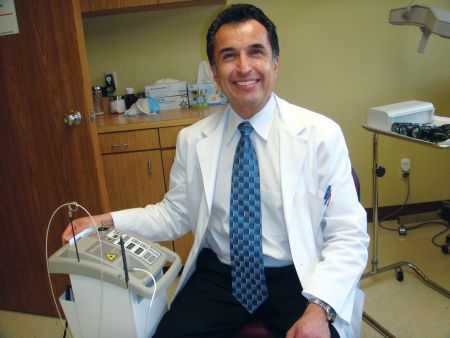 |
Dr. Michael Uro |
“This laser technology has increased my practice immensely,” says Michael Uro, DPM, of Sacramento, CA. Dr. Uro co-authored a retrospective study which concluded that the laser procedure did, in fact, increase total nail clearing six months after treatment for the majority of study patients. Uro says he is thankful to offer patients this new, effective alternative. Source: Uro, M., Journal of Drugs In Dermatology, [September 2010, volume 9, article 9]
08/13/2010
PODIATRIC RESEARCH
MA Podiatrist Part of New Clinical Trial of Collagenase Ointment for Diabetic Wounds Healthpoint has announced that it has initiated a clinical trial assessing the effectiveness of Collagenase SANTYL® Ointment, as compared to vehicle, on the change from baseline in wound area of diabetic foot ulcers (DFU) over four weeks. The trial will also follow subjects to determine the proportion who achieve complete wound closure within 12 weeks of initiating treatment.
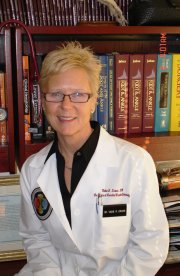 |
Dr. Vicki Driver |
"Foot ulcers are one of the leading causes of hospitalization for all patients with diabetes and present the most common risk for subsequent amputation among diabetics," noted Vickie Driver, MS, DPM, FACFAS, Director, Clinical Research Foot Care, Endovascular and Vascular Services at Boston University Medical Center and one of ten investigators participating in the study. "This study will help inform the clinical community as to whether a widely prescribed enzymatic debriding agent can have a positive impact on wound closure, thereby avoiding the often devastating sequelae associated with this common condition," said Driver. Source: Medcompare [8/10/10]
08/05/2010
PODIATRIC RESEARCH
NY Podiatrist to Be Lead Investigator in ActiPatchtm Clinical Trial A 6-week pilot study evaluating ActiPatchtm as an effective adjunct treatment for the healing of recalcitrant wounds yielded positive results. By week 3, 50% percent of the subjects experienced complete recovery, and by week 6, subjects experienced an average of 93% reduction in ulcer size.
 |
Dr. Elliot Udell |
Elliot Udell, DPM will be the Primary Investigator for this large-scale clinical trial. Dr. Udell is the president of the American Society of Podiatric Medicine and is a board member of the American Society of Podiatric Dermatology. Dr. Udell is board certified in both Podiatric Primary Care and Pain Management. Source: Marketwire.com
07/08/2010
PODIATRIC RESEARCH
Early Treatment of Adult Flatfoot Can Prevent Future Problems: MO Podiatrist Treatment and prevention of adult flatfoot can reduce the incidences of additional foot problems such as bunions, hammertoes, arthritis, and calluses, and improve a person’s overall health, according to research published in the July/August Journal of Foot & Ankle Surgery. “Flatfoot disorder may gradually worsen to the point that many of the tendons and ligaments in the foot and ankle are simply overworking, often to the point where they tear and/or rupture,” said Karl Collins, DPM, FACFAS, a St. Louis foot and ankle surgeon. “If this occurs, even simple walking and standing become increasingly painful, requiring much more energy.”
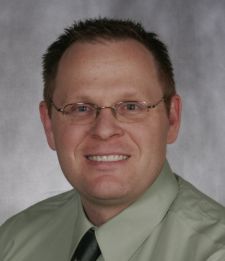 |
Dr. Karl Collins |
In many cases, flatfoot can be treated with non-surgical approaches, including orthotic devices or bracing, immobilization, physical therapy, medication, and shoe modifications. “In some patients whose pain is not adequately relieved by conservative treatments, there are a variety of surgical techniques available to correct flatfoot and improve foot function,” Dr. Collins added. Source: Health News Digest [7/7/10]
12/18/2009
PODIATRIC RESEARCH
Scholl, SALSA Researchers Use Cutting-Edge Walking Sensors Researchers from Rosalind Franklin University of Medicine's Scholl College and the University of Arizona Department of Surgery's Southern Arizona Limb Salvage Alliance (SALSA) have published a pilot project that could revolutionize the way reconstructive surgery is performed in people with diabetes. "In the past, surgery designed to heal wounds or reduce the risk for development of wounds in people with diabetes has been haphazard," noted David G. Armstrong, Professor of Surgery and SALSA's Director. "This study suggests strongly that we can work toward predicting success pre-operatively."
 |
Dr. Bijan Najafi |
The study, which uses cutting-edge sensors that sample pressure points on the bottom of the foot while they walk, employs an entirely new way of analyzing the data. "We can now learn from previous works and use sophisticated algorithms to see deformities and help the surgeon plan the procedure," added Dr. Bijan Najafi, Associate Professor at Rosalind Franklin University and the lead author on this study. Armstrong concluded, "We believe that all clinics may one day have sensors like this and we can go a long way toward reducing unnecessary amputations, which occur once every thirty seconds around the world."
07/28/2009
PODIATRIC RESEARCH
FL Podiatrist to Conduct Stem Cell Research Studies Cryo-Cell International, Inc. one of the largest and most established leaders in stem cell innovation has announced a research and development collaboration agreement with nationally recognized wound specialist, Dr. Robert J. Snyder and the Snyder Wound Research Institute LLC in Tamarac, FL. The partnership will allow Dr. Snyder to conduct research studies using Cryo-Cell's proprietary C'elle menstrual stem cell (MenSC) technology. The goal of these collaborative efforts will be to identify and develop potential future therapeutic applications for chronic wound healing.
|
Dr. Robert Snyder |
In addition to treating patients in private practice, Dr. Snyder serves as medical director of the Wound Healing Center at University Hospital in Tamarac. Dr. Snyder is board certified in foot and ankle surgery by the American Board of Podiatric Surgery. He is a board certified wound specialist by the American Academy of Wound Management and is president-elect of that organization. A frequent contributor to many medical journals, Dr. Snyder is currently consulting editor for Podiatry Management Magazine and a member of the editorial advisory boards of Ostomy Wound Management and Wounds.
07/14/2009
PODIATRIC RESEARCH NEWS
U of A's SALSA Take Top Honors at Research Symposium The University of Arizona Department of Surgery's Southern Arizona Limb Salvage Alliance (SALSA), came away with top honors at this week's American College of Foot and Ankle Orthopaedics and Medicine (ACFAOM) Research Symposium in Orlando, Florida. Their research, focusing on structure, function and outcomes of their now familiar "Toe and Flow" team in treating complications of diabetes was awarded first place in the abstract competition.
1.jpg) |
(From L-R) Dr Katherine Satterfield, Chair Abstract Review Committee, Dr. Clark, Dr. Beth Jarrett, President of ACFAOM |
Dr. Janice Clark, SALSA Fellow and first author on the work was enthusiastic, "I am grateful to ACFAOM and to the organizers. The work that is going on in Arizona is so exciting and it is an honor to be a part of it." Clark's study revealed a much higher level of complexity of patients than had previously been reported in the literature. "About three quarters of these patients had significant vascular disease. This, coupled with kidney disease and their loss of sensation makes this population with diabetes at enormously high risk for high-level amputation. That's why it takes a team to make a difference." The study, coauthored by SALSA's Manish Bharara, PhD and senior authors Professors Joseph L. Mills and David G. Armstrong is part of a larger SALSA registry designed to collect long-term outcomes data in amputation prevention efforts.
05/02/2009
PODIATRIC RESEARCH NEWS
UA Study of ‘Water-Scalpels” Recommends Precautions Against Bacteria Researchers from The University of Arizona Southern Arizona Limb Salvage Alliance (SALSA) and the University of Manchester College of Medicine in the United Kingdom took away the top poster award at the Symposium for the Advancement of Wound Care (SAWC) in Dallas. Their study evaluating the use of sophisticated "water-scalpels" used in surgical reconstruction suggests that precautions against bacterial contamination need to be made during their use.
.jpg) |
Dr. David G. Armstrong |
"The data from this study surprised us," said David G. Armstrong, DPM, PhD, professor of surgery, SALSA's director, and senior author on the study. "In a highly controlled mock-operating room environment, tiny bacteria can be released that stay in the air over a prolonged period of time. We should be mindful of this to avoid increasing the risk of contamination." The surgeon-researchers suggest tips to reduce this transmission, like using additional operating room equipment to shield the area during surgery. "We believe this work challenges what we do everyday and helps us get better so we can further improve promising technologies to heal more wounds," Dr. Armstrong said. The "water scalpels" use water forced through a precision instrument at thousands of pounds per square inch to precisely remove dead tissue.
|
| |

|
|
|